Understand Japandi style through its 5 core principles
 Save
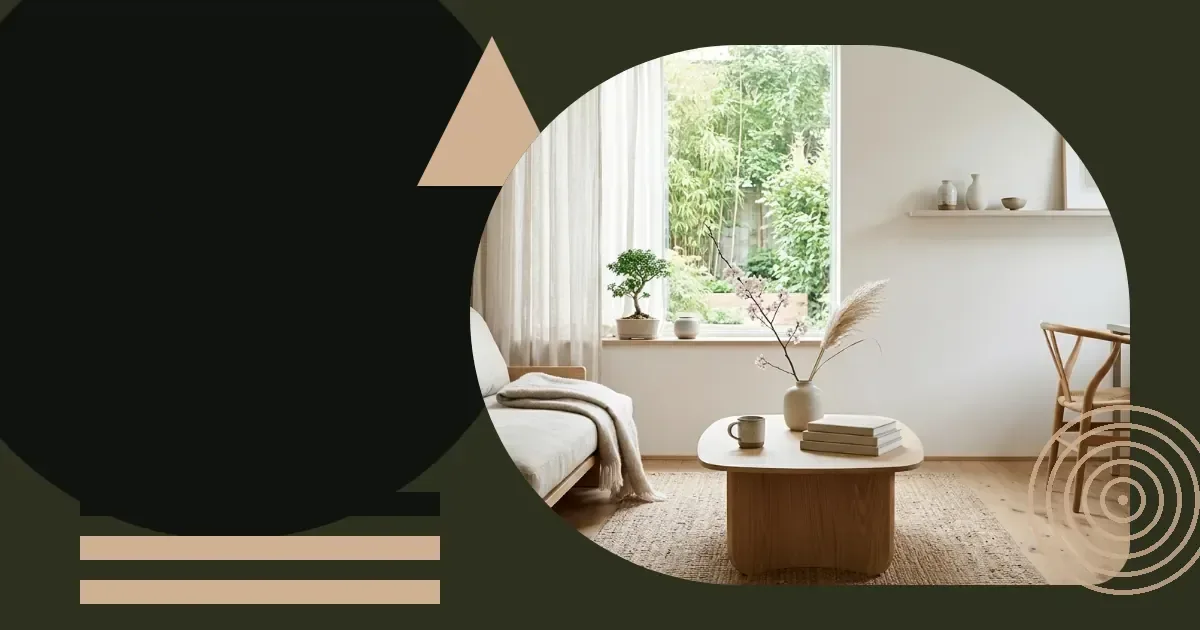
Japandi style merges the clean lines and calm of Japanese interiors with the warmth and texture of Scandinavian design. It values restraint over decoration, natural materials over synthetic ones, and spaces that breathe over rooms that shout. At Fleur and Grey, we set out what makes this approach distinctive and how its principles shape the choices you make at home.
Start with fewer, better things
Japandi interiors hold only what earns its place. A chair, a table, a lamp: each is chosen for how it works and how it looks, then given room to be seen. The rest is space.
This is not about emptying rooms or living without comfort. A sofa piled with cushions, properly arranged, still fits the principle. The difference lies in stopping before the room feels crowded.
Walk through the room and name what each object does. If something sits unused or half-hidden, it leaves.
Choose materials the eye can rest on
Wood, linen, wool, stone, paper: Japandi style draws on materials that age without looking worn. Scandinavian tradition brings pale oak and ash; Japanese craft favours darker walnut or teak. Both avoid the high gloss and sharp edges of mass production.
Texture matters as much as colour. A rough-weave throw or a timber surface left unvarnished gives the room weight without adding pattern. Synthetic fabrics and plastic finishes are replaced wherever the budget allows.
- Pale timber for furniture and flooring
- Linen or cotton for curtains and upholstery
- Wool or jute for rugs
- Ceramic or stoneware for smaller pieces
The palette stays neutral: whites, greys, beiges, with black or charcoal as an accent. Colour appears sparingly, often in the form of houseplants or a single painted surface.
Let function lead the form
Every piece in a Japandi room works first and decorates second. A dining table seats the household; a shelving unit holds what the household uses; a stool gives somewhere to sit while pulling on boots. Beauty follows from the thing doing its job well.
This is where the Japanese concept of wabi-sabi overlaps with Scandinavian practicality. Imperfection is left visible when it tells the story of how something was made or used. A wooden bowl with a visible grain, a hand-thrown pot with an uneven glaze: these sit comfortably in a Japandi interior because they are honest about what they are.
Furniture with clean lines and no ornament suits the principle better than pieces with carving, embellishment or unnecessary detail. Storage is built in or hidden; surfaces are kept clear.
Work with the light the room already has
Japandi interiors rely on natural light as the main source, shaping the day around how brightness moves through the room. Curtains are sheer or absent; window treatments let the light in rather than blocking it out.
When artificial lighting is needed, it is warm, low and placed where the task demands it: a floor lamp beside a chair, a pendant over a table. Overhead lighting is softened with shades made from paper, fabric or wood veneer. The aim is to mimic daylight's gentleness rather than flood the room.
Reflective surfaces—mirrors, pale walls, polished floors—bounce what light there is further into the space. Dark corners are left dark rather than fought with brighter bulbs.
Strip back the decoration
Walls in a Japandi room are plain or textured, never busy. Wallpaper, if used at all, is subtle: a faint stripe, a woven texture, a wash of colour that reads as flat from a distance. Pattern stays small and infrequent.
A single piece of art or a small grouping takes the place of a gallery wall. Frames are simple; the subject matter is often abstract, landscape or botanical. Shelves hold a few objects with space between them, not rows of ornaments.
The principle here is ma—the Japanese term for the space between things. Emptiness is not wasted; it is what lets the eye rest and the mind settle. A room that applies this feels larger than its measurements suggest.
Make it work in the space you have
- Clear one surface completely. A side table, a shelf, a windowsill: take everything off, dust it, and put back only what you use daily or truly want to see.
- Replace one synthetic item with a natural one. Swap a polyester cushion cover for linen, or a plastic storage box for a woven basket. The change is small but the room reads differently.
- Edit your wall hangings. Remove half of what is on the walls. Live with the space for a week, then decide whether to add one piece back.
- Introduce one houseplant. A single plant in a plain ceramic pot brings life without clutter. Place it where it gets the light it needs, not where you think it should go.
Where Japandi style bends
Not every home suits restraint. Period features—dado rails, coving, skirting boards with detail—sit uneasily with the principle of plain surfaces. A Victorian terrace or a cottage with low ceilings may resist the open, airy quality Japandi interiors aim for.
In these cases, the approach adapts rather than overwrites. Keep the palette neutral, the furniture simple and the decoration minimal, but let the architecture speak. Paint skirting boards and coving in the same colour as the walls to reduce visual breaks. Choose furniture that does not compete with the room's existing character.
Small rooms benefit from the decluttering principle but may need more storage than the aesthetic strictly allows. Built-in cupboards or low-profile units keep belongings out of sight without adding bulk.
Compare the principles with other styles
| Principle | Japandi | Scandi alone | Minimalism |
|---|---|---|---|
| Colour | Neutral with warmer tones | White-dominant, brighter | Monochrome or stark white |
| Texture | Layered, tactile | Present but lighter | Often absent |
| Decoration | Minimal, intentional | More pattern, more objects | Strictly functional |
| Wood tone | Mid to dark | Pale, blonde | Any or none |
Apply it to one room this week
Pick the room where the household spends the most waking hours. Clear the surfaces, reduce the wall decoration and swap one item for a natural alternative. The shift will be visible within an afternoon.
Japandi style is not a shopping list or a set of rules to follow exactly. It is a set of principles that push back against clutter, noise and unnecessary decoration. Apply them where they fit, ignore them where they do not, and let the result be a room that feels calmer than it did before.
Download PDF: Japandi principles checklist PDF, 27 KB
Further reading
Frequently asked questions
How is Japandi different from Scandinavian style on its own?
Japandi takes Scandinavian warmth and pairs it with Japanese restraint. The result is warmer and darker in tone than typical Scandi interiors, with more emphasis on texture and less on pattern or bright whites.
Can Japandi style work in a rental property?
Yes. The principles focus on furniture, textiles and what you place in the room rather than structural changes. Decluttering, choosing natural materials and keeping decoration minimal all work within tenancy agreements.
Do I need to replace all my furniture to create a Japandi interior?
No. Start by removing what does not fit the principle, then replace items one at a time as the budget allows. A few well-chosen pieces in natural materials will shift the feel of a room more than a complete overhaul with cheaper alternatives.