Keep your rugs flat on wooden floors with 5 practical fixes
 Save
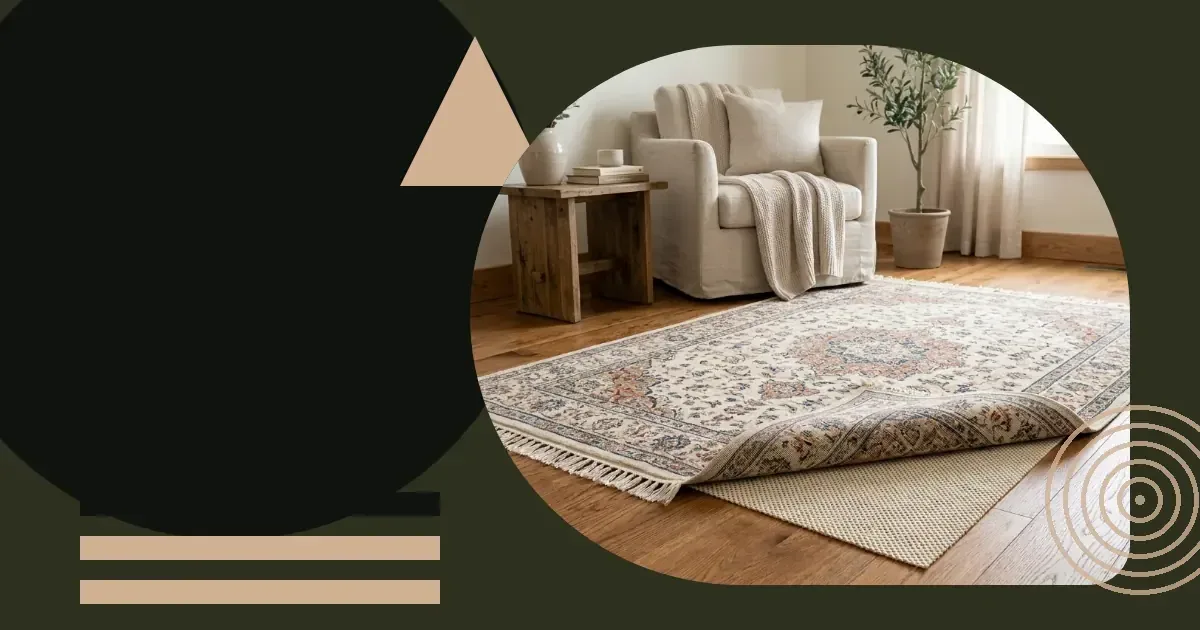
A rug that slides across a wooden floor is more than annoying—it creases, trips people up and wears unevenly. The right grip depends on the floor finish, the rug's weight and whether you own or rent. Fleur and Grey compares the methods that work, including ones you can assemble from what's already in a drawer.
Why rugs slide and what makes wood floors different
Rugs slip because there's nothing to bind the backing to the floor surface. Varnished or oiled wood is smooth, and even unsealed boards have less tooth than carpet or vinyl. Heavier rugs stay put longer under their own weight, but a thin cotton dhurrie or a small bath mat will travel as soon as someone crosses it.
The solution has to suit the floor finish. Adhesive grips can pull varnish or wax; rubber that works on laminate may leave marks on oiled boards. If you rent, anything permanent is out.
Match the grip to your floor and rug
Not every method suits every floor. The table below sets out what works where, so you can pick without guessing.
| Method | Floor type | Rug weight | Rental-friendly |
|---|---|---|---|
| Rubber mesh underlay | Sealed wood, laminate | Light to heavy | Yes |
| Felt pad with rubber side | Varnished or oiled boards | Medium to heavy | Yes |
| Double-sided rug tape | Sealed wood only | Light rugs | No—leaves residue |
| Silicone caulk dots (DIY) | Sealed wood, laminate | Light to medium | Yes—peels off backing |
Check the finish before you buy anything
Run a finger across the boards. If it glides with no drag, the floor is varnished or sealed. A slight catch means oil or wax. Unsealed wood feels dry and absorbs a drop of water in seconds rather than beading it.
Fix it in five steps with what you choose
Follow these steps for any of the methods above. The principle is the same; only the material changes.
- Lift the rug and vacuum both the floor and the rug's underside. Dust stops grip working, and grit scratches wood when the rug moves.
- Cut the underlay or pad to size. It should sit a hand's width inside the rug edge all round, so it never shows and the rug's border lies flat.
- Lay the grip material on the floor first, textured or rubberised side down. For tape or caulk, apply it to the rug backing instead and let caulk dry fully before the next step.
- Place the rug on top and press down firmly, starting at the centre and working out. Walk across it a few times to bed it in.
- Check the edges after a day. If one corner still lifts, add a second small piece of grip just there rather than replacing the whole sheet.
DIY grips when you'd rather not buy
Silicone caulk applied in small dots to the rug backing grips sealed floors without tape or pads. Use clear bathroom or kitchen sealant—the kind that stays flexible when dry. Space dots the width of your thumb apart, leave them to cure overnight and peel them off the backing when you move. The method suits light rugs on laminate or varnished boards; it won't hold a heavy wool rug and may mark oiled finishes.
Another approach is to sew or glue small patches of soft rubber shelf liner to each corner of the backing. Cut squares the size of a coaster, press them on and trim any overhang. This works for mats in front of sinks or doors where only the corners lift.
What not to try
Avoid PVC or hard plastic mesh, which can trap moisture and stain wood over time. Double-sided carpet tape meant for broadloom pulls at varnish when removed and leaves sticky residue that needs solvent to shift. If the floor is waxed, anything adhesive will strip the wax layer and leave a dull patch.
Maintain the grip so it lasts
Rubber and felt pads collect dust on the side that faces down, which reduces friction. Every few months, lift the rug, shake out the pad and wipe both sides with a damp cloth. Let it dry completely before laying it back down—damp rubber on wood invites mould, especially in a poorly ventilated room.
Silicone dots lose grip as they gather fluff. Peel them off, wipe the backing clean and reapply if the rug starts to creep again. Dots last longer on rugs that don't get daily foot traffic.
Choose by rug type and room
A jute or sisal rug with a coarse backing grips better on its own than smooth cotton or synthetic weaves, but still benefits from a thin felt pad to protect the floor from abrasion. In a hallway, where rugs take more scuffs and get kicked by shoes, a rubber mesh underlay handles the movement better than tape. For a bathroom mat, silicone dots are enough—you lift and wash the mat often, and a pad would get damp.
Large area rugs stay flat under furniture weight, so grip the open edges only. A narrow runner in a corridor or on stairs needs grip along its full length, or it will ruck up in the middle even if the ends are held.
Rugs on rugs need grip too
Layering a small rug over a larger one creates the same slip problem. Use a rubber mesh pad between them, cut slightly smaller than the top rug. The mesh grips textile-to-textile better than felt, which can slide on looped or flatweave backings.
When to worry about the floor underneath
If the boards are uneven or a single plank rocks when you step on it, fix that before adding a rug—grip won't compensate for movement in the floor itself, and the rug will still creep. Similarly, if varnish is flaking or the surface feels tacky, laying anything rubber-backed on it may peel more finish away. Restoring your skirting boards in 3 steps without lifting a paintbrush covers surface prep for woodwork in a similar state, and the same principles apply to floorboards.
Grips won't hide a stained or damaged patch of floor; they'll draw attention to it by holding the rug precisely where it sits. Move the rug to cover the mark, then add the grip—so long as the floor is structurally sound, cosmetic flaws are no obstacle.
Store underlays flat to keep them working
Rubber mesh and felt pads develop creases if you roll or fold them for long periods, and a creased pad creates lumps under the rug. When you move or store a rug, roll the pad loosely with the rug around a cardboard tube, or lay it flat under a bed. If it does crease, lay it textured side down on a clean floor for a day or two with a light weight—a couple of books—on the crease, and it will flatten again.
Adjust your approach for underfloor heating
Thick felt or foam pads can insulate the floor and reduce the efficiency of underfloor heating. If your boards are heated, choose a thin rubber mesh instead, or go without and rely on the rug's own weight plus silicone dots at the corners. Check the heating system's manual—some specify a maximum combined thickness for floor coverings.
Never use adhesive tape on heated floors; the warmth softens the glue, which then transfers to the wood and is nearly impossible to remove cleanly.
#Budget decorating #DIY #Storage solutions #Neutral colours
Download PDF: Rug grip checklist PDF, 27 KB
Frequently asked questions
Do rug grips damage wooden floors?
Rubber mesh and felt pads are safe for sealed or oiled wood and leave no marks when you lift them. Adhesive tape can pull varnish or leave sticky residue and is not recommended unless the floor is very heavily sealed and you plan to keep the rug in place long-term.
Can I use the same underlay on laminate and real wood?
Yes. Rubber mesh works on both because it grips by friction rather than adhesive. Laminate is slightly more forgiving of different materials, but anything safe for varnished wood is also safe for laminate.
How do I stop a bathroom mat slipping when it gets wet underneath?
Lift the mat after every shower to let both it and the floor dry. Apply silicone caulk dots to the backing rather than using a pad, because pads trap moisture and can cause mould on wooden floors in damp rooms.