Making your rental feel like home with 6 moves that leave no mark
 Save
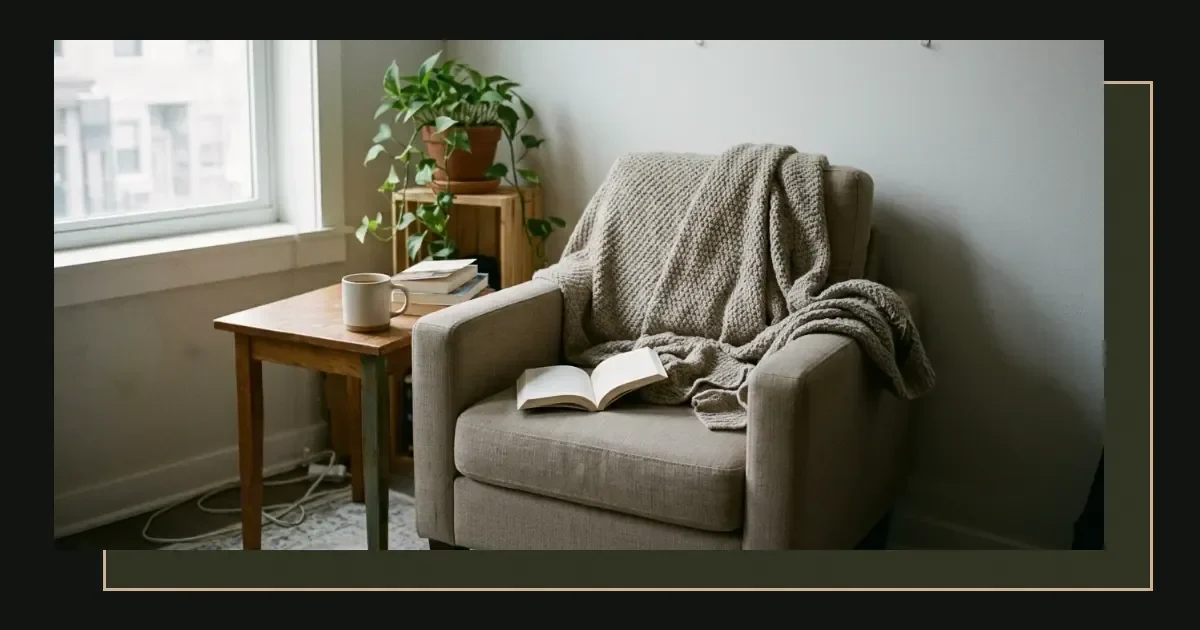
A rental can feel like home without touching the walls. Rearranging what you already own, adding layers through textiles and bringing in your own lighting shifts the atmosphere in ways a landlord will never notice. What follows are the moves that work within the tightest tenancy agreements, focused on arrangement and portable pieces rather than paint or fixtures.
Rearranging furniture to suit how you actually live
The layout a landlord leaves rarely matches how anyone uses a room. Pulling a sofa away from the wall creates a zone; angling a chair toward the window instead of the television changes where the room's centre sits. In a Fleur and Grey guide on arranging furniture in long narrow rooms, the principle holds: furniture that serves your routines makes a space feel intentional rather than borrowed.
Try setting furniture into groups based on what happens there—reading, working, eating—rather than pushing everything against the perimeter. A rug under each group anchors it without permanent markings. In practice, you might find a small table and two chairs work better pulled into the middle of a studio than left in the kitchen corner, creating a dining area that feels deliberate.
Layering textiles without nails or adhesive
Throws, cushions and rugs build warmth and colour into a rental without altering a single surface. A large rug softens hard flooring and defines a seating area; a throw folded over the back of a sofa introduces texture; cushions in fabrics you chose replace the generic set that came with the flat.
The key is layering: one rug over existing carpet, two or three cushion covers in different weights, a blanket hung over a chair arm. Each layer adds depth, and all of it packs into a box when the tenancy ends. If you want to mix patterns across those textiles, scale and colour moves keep them cohesive rather than chaotic.
Bringing in your own lighting instead of relying on the landlord's fittings
Overhead lighting flattens a room; lamps at different heights soften it. A floor lamp beside the sofa, a table lamp on a sideboard and a small reading light on a bedside table create pools of light that feel warm rather than institutional.
Most rentals allow plug-in lighting without question. Position lamps where you sit in the evening—next to the chair where you read, on the desk where you work—and switch off the ceiling fixture. The change is immediate: the room feels considered, as though someone lives there on purpose.
Filling walls with frames and temporary fixings
Bare walls announce a rental more plainly than anything else. Picture ledges that lean against the wall, adhesive strips rated for frames, or a freestanding easel all add your images without breaking the terms. Command strips hold lightweight frames on painted walls; picture rails in older properties take hooks that leave no mark.
Group frames by size or subject rather than spacing them evenly. An arrangement that feels organic—three frames of different sizes clustered on one wall—reads as a choice rather than an attempt to cover space. Leave some wall blank; the contrast makes what you did hang feel more intentional.
Adding portable storage that doubles as furniture
Storage in a rental is usually lacking, and the pieces that come with the flat rarely suit what you own. Freestanding shelving, a low bookcase used as a console table, or woven baskets stacked in a corner all hold belongings while shaping how the room looks.
Choose storage you can take with you: modular units that break down, sideboards on legs that work in several rooms, baskets that fold flat. Each piece serves a function—books, blankets, shoes—and also fills space that would otherwise feel hollow. A tall bookcase divides an open-plan studio into zones without building a wall.
Bringing in plants and natural materials
Plants soften hard edges and introduce life into a space that might otherwise feel static. A large pot on the floor, smaller plants on a windowsill, or a trailing variety on a high shelf all work in rentals, portable when the lease ends.
Choose pots and planters that suit your taste rather than whatever the previous tenant left behind. Ceramic, terracotta or woven baskets all add texture beyond the green of the plant itself. Pair plants with natural materials—a wooden tray, a jute rug, linen cushions—and the rental starts to feel layered rather than sparse.
Following six steps that make the difference today
- Move one piece of furniture away from its current position and see whether the room opens up or gains a clearer purpose.
- Add a rug in a room that lacks one, choosing a size that sits under the front legs of your seating rather than floating in the centre.
- Replace overhead lighting with at least two lamps positioned where you actually sit, then leave the ceiling light off for an evening.
- Hang three frames using adhesive strips or a picture rail, grouping them on one wall rather than spreading them around the room.
- Introduce one tall plant in a pot that suits your style, placing it in a corner or next to a piece of furniture that needs balancing.
- Layer textiles by adding a throw and two cushion covers in fabrics that feel like yours, even if the furniture underneath belongs to the landlord.
Comparing your options for adding colour
| Method | What it changes | How easily it reverses |
|---|---|---|
| Large rug in a bold shade | Floor and the feeling of the whole room | Roll it up and take it with you |
| Cushion covers and throws | Seating without replacing furniture | Swap them out or pack them in minutes |
| Framed prints or fabric wall hangings | Bare walls into something personal | Remove adhesive strips or unhook from rail |
| Freestanding storage in a strong colour | Adds function and a statement piece | Flat-pack designs break down for moving |
Working with what the landlord left behind
Some rental furniture stays because moving it breaches the agreement. A beige sofa or a dated sideboard can sit in the background if you layer your own pieces around it—a bright throw over the sofa, your own lamps and books on the sideboard. The eye moves toward what you added rather than what was already there.
Clean and rearrange the landlord's furniture before you dismiss it. A dining table shoved against the wall might work better pulled into the room; a wardrobe that feels bulky could become less obvious with a tall plant beside it. You're not obliged to love what was left, but small shifts in position often make inherited pieces less intrusive.
Choosing portable pieces that move with you
Anything you buy for a rental should justify the space it takes in the van when you leave. Modular shelving, folding screens, stools that stack and mirrors that lean rather than fix to the wall all serve a purpose now and pack away later.
Avoid anything built-in or tailored to this flat's exact dimensions. Standard sizes—a rug that works in various rooms, a sofa table that fits behind any three-seater—give you flexibility when the next rental has a different layout. The question before buying is whether the piece will work somewhere else, not just here.
#Rental #Budget decorating #Small rooms #Storage solutions
Download PDF: Making a rental yours: a checklist for moves that leave no trace PDF, 29 KB
Further reading
Frequently asked questions
How do you make a rental flat feel cosy without painting the walls?
Layer textiles such as rugs, throws and cushions to add warmth and colour. Bring in your own lighting through floor and table lamps rather than relying on overhead fixtures, and fill the walls with framed prints using adhesive strips or picture rails that leave no damage.
What are the best temporary changes for a rented property?
Rearranging furniture to suit how you live, adding portable storage that doubles as furniture, and bringing in plants all transform a rental without altering the structure. Each change reverses when you move, and none requires landlord permission under most agreements.
Can you hang pictures in a rental without damaging walls?
Adhesive strips designed for frames hold lightweight pictures on painted walls without leaving marks. Picture rails in older rentals take hooks that need no fixings, and freestanding picture ledges lean against the wall, supporting several frames at once.