Bring Coastal Style Into Your Home Without Looking Like a Beach Hut
 Save
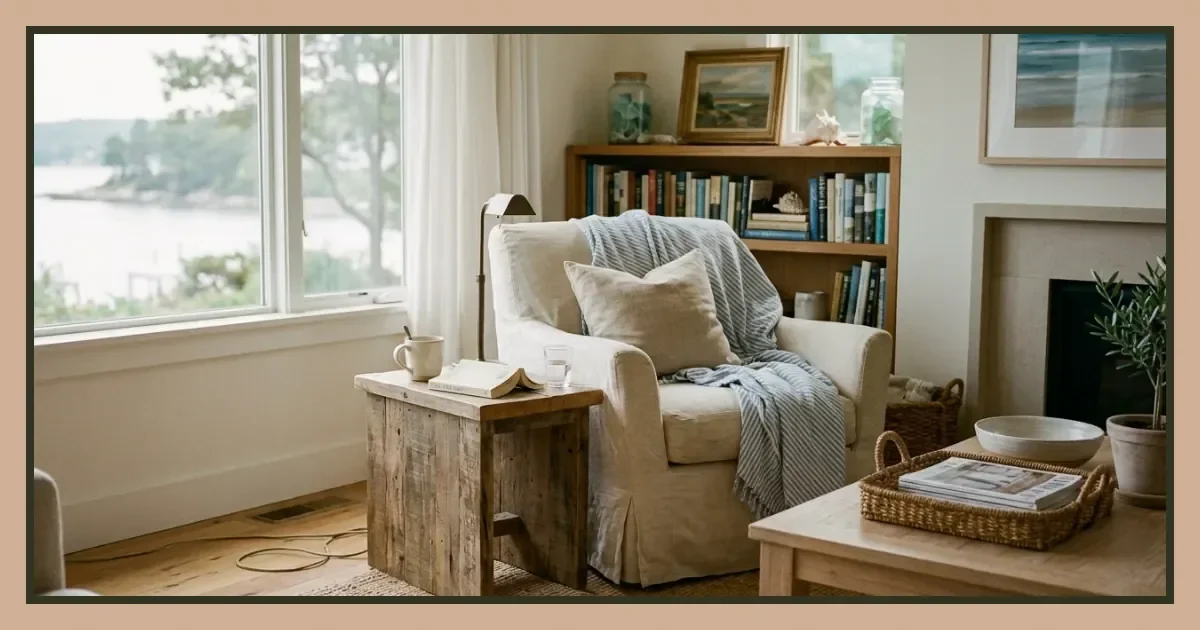
Coastal style decorating takes its cues from the light, air and easy pace of seaside living. It centres on natural materials, pale colours and uncluttered surfaces that let a room breathe. The challenge is capturing that calm without tipping into novelty anchors, striped deckchairs or anything that belongs in a gift shop. Fleur and Grey walks you through six moves that bring the feel of the coast into your space with restraint.
Start with Light and Keep It Generous
Coastal interiors depend on daylight. The palette and the materials work because they amplify whatever natural light reaches the room. If your windows are small or face north, the style falters — everything reads flat instead of lifted.
Maximise what comes in. Take down heavy curtains and replace them with sheer linen or leave the glass bare if privacy allows. Paint the walls and ceiling white or the palest grey to bounce light back into the room. Gloss on woodwork adds another reflective surface without pattern.
Where natural light is limited, layer your artificial sources instead of relying on a single overhead. Table lamps with linen shades and wall-mounted uplighters create a softer, more even spread that mimics daylight better than a single ceiling pendant.
Choose Your Palette from Weathered Surfaces, Not Souvenirs
The colours of coastal style come from what the sea and the weather do to buildings and landscape over time — bleached wood, salt-stained stone, sand left to dry. They are muted, dusty and low in contrast.
Start with off-white or the palest grey-blue on the walls. Add one or two accent colours taken from natural coastal materials: the grey-green of driftwood, the warm beige of rope, the soft rust of oxidised metal. Avoid primary blues and reds, which belong to nautical themes rather than coastal interiors.
Test your choices under the room's own light before committing. Coastal palettes rely on subtle shifts in tone, and a colour that looks right on a sample card can flatten or turn cold once it covers a wall. Match your white paint to the light in your room to avoid a finish that works against the space.
Bring In Texture Through Natural Fibres and Worn Finishes
Texture does most of the work in a coastal room. Without it, pale colours and simple furniture read as sparse rather than serene.
Layer different weaves and surfaces. Linen curtains, jute rugs, cotton throws and wool cushions all come from plant or animal fibres and carry the uneven, handmade feel the style needs. A seagrass basket, a chunky knit or a length of undyed muslin adds depth without colour.
Wood should look used. Bleached oak, driftwood or reclaimed timber with visible grain and weathering works better than anything polished or stained dark. If your furniture is new, choose pieces with a matte or limed finish rather than gloss.
Avoid anything shiny or synthetic. Chrome, glass and high-gloss laminate pull the room away from the organic feel coastal style depends on.
Keep Furniture Low, Simple and Unfussy
Coastal interiors favour pieces that sit close to the ground and have clean, straightforward lines. The aim is to keep sightlines open and avoid visual clutter.
- Choose a sofa or daybed with low arms and exposed legs rather than a high-backed design with a skirt. The extra space underneath makes the room feel larger.
- Pick tables and storage with a light frame — turned legs, open shelving, wicker or rattan instead of solid wood panels.
- Leave surfaces mostly clear. A single bowl, a stack of books or a piece of driftwood is enough; coastal style loses its point when shelves and side tables are crowded.
- Avoid pattern on upholstery. Plain linen, cotton canvas or ticking stripes in muted tones keep the focus on texture and form.
- Mix in one or two vintage or reclaimed pieces — a painted wooden chair, a metal trunk, an old ladder used as a towel rail — to add character without formality.
Add Natural Elements Without Turning the Room Into a Collection
Shells, pebbles and driftwood are coastal, but they tip into kitsch when grouped or displayed like trophies. Use them sparingly and let each piece earn its place.
A single large shell on a windowsill or a piece of driftwood propped against a wall works because it sits alone and the eye can rest on it. A bowl of shells or a string of starfish turns the room into a theme.
Bring in plants instead. Grasses in ceramic pots, a succulent in a simple dish or a trailing houseplant on a high shelf add life and movement without looking contrived. Choose containers in neutral tones — terracotta, unglazed ceramic, woven baskets — that blend with the palette rather than stand out.
Control Pattern and Keep It Organic
Coastal style uses pattern lightly. Too much, or the wrong kind, overwhelms the simplicity the look depends on.
| Pattern type | Works in coastal style | Pulls away from it |
|---|---|---|
| Stripes | Narrow ticking or mattress stripe in soft colours, used on one cushion or a blind | Bold nautical stripes in navy and white, or stripes on multiple surfaces |
| Botanical | Faded ferns, grasses or seaweed prints in ink or watercolour | Bright tropical leaves or oversized florals |
| Geometric | Small-scale checks or simple grid in neutral tones | Large chevrons, ikat or anything high-contrast |
Limit pattern to one or two pieces per room and keep the rest plain. A single patterned cushion on a linen sofa, or a printed throw folded at the foot of the bed, is enough. When everything competes, the room loses the breathing space coastal style is built on.
Avoid the Obvious Coastal Clichés
Certain items signal beach hut rather than refined coastal interior. Spotting them early saves a room from feeling like pastiche.
Skip anything with anchors, helms, lighthouses or sailboats printed or carved on it. Avoid rope used decoratively — as a curtain tieback, mirror frame or drawer pull. Leave out signs with slogans about tides or sunsets.
Steer clear of distressed furniture painted in bright aqua or turquoise. The worn-paint look works in pale grey or off-white, but strong blues read as forced rather than natural.
Netting, oars and lifebuoys belong in a maritime museum, not a living room. If the item would look at home in a seaside gift shop, it does not belong in a coastal interior.
The style works because it suggests the coast through material, light and restraint, not because it states the theme outright. When in doubt, choose the simpler, plainer option. Balance old and new furniture in four practical moves to add character without clutter, and get your dining table rug size right to anchor the space without overwhelming it.
Coastal style decorating gives a room calm and light when you work from natural materials, muted tones and uncluttered surfaces. It falters the moment the details become literal or the palette turns bright. The moves above let you bring the feeling of the coast into your home without turning it into a stage set.
#Neutral colours #Natural light #Texture
Download PDF: Coastal Style Checklist PDF, 28 KB
Further reading
Frequently asked questions
What colours are best for coastal interiors?
Off-white, pale grey-blue and soft neutrals taken from weathered coastal materials work best. Add one or two muted accent colours such as grey-green, warm beige or soft rust. Avoid primary blues and reds, which lean nautical rather than coastal.
How do you make coastal style work in a dark room?
Maximise natural light by removing heavy curtains and painting walls and ceilings in pale colours. Layer artificial light sources with table lamps and uplighters to create an even spread. Choose reflective finishes on woodwork to bounce light around the space.
What materials give a coastal feel without looking too nautical?
Linen, jute, seagrass, cotton and weathered wood all bring coastal texture without nautical clichés. Choose natural fibres with visible weaves and avoid anything shiny or synthetic. Bleached or reclaimed timber works better than polished or dark-stained wood.