Balance old and new furniture in four practical moves
 Save
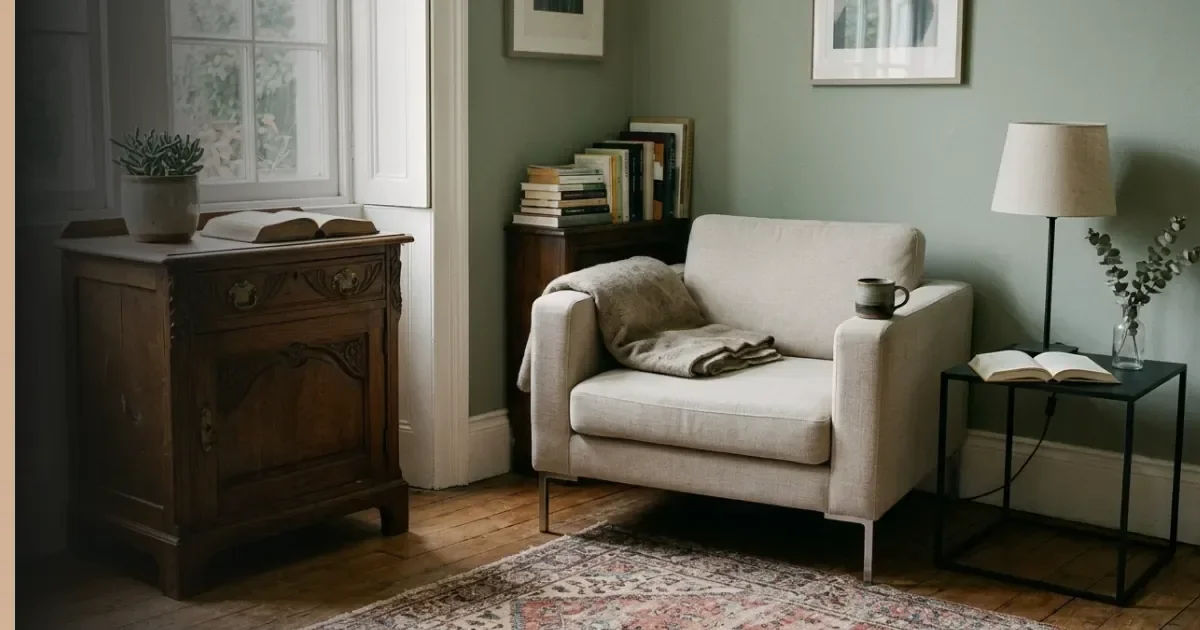
Mixing old and new furniture stops a room feeling like a showroom or a museum. The challenge is making pieces from different decades sit together without one style drowning out the other. Fleur and Grey walks through the balance and proportion techniques that let a Victorian side table work alongside a modern sofa, or a mid-century chair hold its own next to contemporary storage.
Match the visual weight across the room
An ornate carved dresser has more visual weight than a simple open shelving unit, even when both are the same height. When all the heavy pieces cluster on one side of the room, the space tips. Spread the weight evenly: if the antique wardrobe anchors one wall, put a chunky modern bookcase or a solid contemporary console opposite it.
Delicate vintage chairs pair better with slimline modern tables than with heavy farmhouse ones. A glass-topped contemporary coffee table lets a richly patterned rug underneath breathe, balancing a traditional upholstered sofa above it.
Repeat one finish or material between old and new
Brass drawer pulls on a vintage chest echo brass lamp bases on a modern side table. Dark-stained wood on an inherited dining table links to walnut legs on a new armchair. The finish becomes a thread that ties pieces together, even when their shapes and ages differ.
Painted furniture offers another route: a freshly painted vintage dresser in the same white as a contemporary shelving unit reads as intentional rather than accidental. The colour carries across, and the style difference becomes a feature rather than a mismatch.
Keep the palette limited
Three finishes across all the furniture in one room is enough. More than that and the eye has nowhere to rest. Wood tone, painted white and brushed steel might be your three; or black metal, natural oak and soft grey.
Anchor the room with one large contemporary piece
A modern sofa or a clean-lined bed frame gives the room a clear base from which older pieces can stand out. Without that anchor, a collection of vintage finds can drift into looking cluttered or unplanned.
The contemporary piece sets the scale. Smaller vintage items then layer in around it: a retro side table, a wooden stool, a framed mirror. Each adds character without competing for attention. The large modern piece holds the room together and lets you read the older ones as deliberate choices rather than leftovers.
Group by function, not by era
Putting all the old furniture on one side and the new on the other splits the room into a before-and-after display. Group pieces by what they do instead: seating in a conversation arrangement, storage along one wall, lighting at task height.
A vintage armchair and a new two-seater can face each other across a coffee table. An antique chest of drawers sits next to a modern wardrobe in a bedroom because both offer clothes storage. The function links them, and the style difference adds interest rather than confusion.
Avoid matching pairs from different eras
Two identical modern chairs work. Two identical vintage chairs work. One modern and one vintage chair, placed symmetrically as a pair, highlight the difference rather than blending it. Use symmetry within an era, and let asymmetry carry the mix.
Four steps to start mixing old and new furniture
- Choose the largest piece in the room as your anchor—ideally something contemporary with clean lines that won't fight for attention.
- Pick one finish or material to repeat across at least three pieces: wood tone, metal type, or painted colour.
- Spread the visual weight evenly: if a heavy carved piece sits on one wall, balance it with something solid and modern opposite.
- Stand in the doorway and check the sight lines—no single style should dominate what you see first.
Use texture to soften hard contrasts
A sleek lacquered modern sideboard can look cold next to a rough-hewn antique table. Add a linen runner, a ceramic bowl or a woollen throw, and the textiles bridge the gap. Texture softens edges and gives the eye something tactile to move between when shapes and finishes differ sharply.
Vintage wood furniture often carries patina and grain that add warmth. Pair it with modern pieces in natural materials—linen, wool, stone, cork—rather than high-gloss or plastic finishes, and the two eras feel like they belong in the same room. If the layout allows, breaking the symmetry with zoning can help define separate functions without splitting the room by style.
How the room's architecture guides the mix
Period features such as cornicing, picture rails and ceiling roses suit a heavier lean toward traditional furniture, with modern pieces kept simple and understated. A new build with plain walls and flush doors can take bolder vintage statement pieces because the backdrop won't compete.
Alcoves flanking a chimney breast work well with built-in or vintage storage, leaving the centre of the room for contemporary seating. Bay windows suit older occasional chairs or a refurbished window seat, while the main furniture stays current. Let the architecture tell you where each era belongs.
Comparing three approaches to mixing furniture styles
| Approach | What it does | Works best when |
|---|---|---|
| Modern anchor, vintage accents | Large new pieces set the tone; older items add character | You want a contemporary base with personality |
| Vintage anchor, modern support | Statement antique piece leads; clean-lined new items recede | You have one inherited or standout traditional piece |
| Equal split by zone | One function or area leans modern, another leans vintage | Open-plan spaces or rooms with clear activity zones |
Avoid these common mixing mistakes
Matching wood tones exactly across old and new furniture makes the age difference more obvious. Let the tones vary slightly, or introduce a painted piece to break the expectation of a match.
Overcrowding hides the qualities of individual pieces. Each item, whether antique or contemporary, needs space around it to register. If vintage finds keep arriving, something modern may need to leave. For surfaces that take knocks, proper care of older upholstery keeps it looking intentional rather than tired.
Mixing too many different wood species in one room creates visual noise. Stick to two or three: oak and walnut, teak and pine, mahogany and beech. More than that and the room loses cohesion.
Trust proportion over provenance
A piece's age matters less than whether its scale suits the room. An oversized antique wardrobe can dwarf a small bedroom, while a delicate modern console might disappear in a large hallway. Measure the space, then choose by proportion. Style follows.
#Modern interiors #Statement pieces #Texture #Neutral colours
Further reading
Frequently asked questions
Can I mix dark wood antique furniture with light modern pieces?
Yes, but repeat one element between them—a dark metal finish on modern lighting to echo the antique wood, or upholstery fabric in a mid-tone that bridges both. The contrast works when something else ties the pieces together.
How do I stop vintage furniture looking like hand-me-downs?
Give each vintage piece space to breathe rather than clustering them together, and pair them with one or two confident modern anchor pieces. Reupholstering or repainting older furniture in a current colour also signals intention rather than economy.
What's the easiest way to start combining furniture styles if I'm nervous about getting it wrong?
Begin with one vintage accent piece—a side table, chair or mirror—in a room that's otherwise modern. If it works, add a second vintage item in a different part of the space. Build gradually rather than mixing everything at once.