Break the symmetry: five zoning moves for your square living room
 Save
A square living room gives equal space on all sides, but that symmetry can work against you. Furniture pushed to the walls leaves a dead centre, while everything facing one focal point makes the room feel flat. The way through is to create zones that pull the eye across the space rather than pin it to one corner. Fleur and Grey walks you through the placement moves that give a boxy room direction and purpose.
Pull the sofa away from the wall
A sofa floating in the room rather than pressed against a wall does two things at once: it breaks the square's rigidity and creates a zone behind it. That zone becomes a place for a console table, a reading chair or a route through to another part of the room.
Position the sofa so its back is at least half a metre from the wall. The gap should feel deliberate, not accidental. If the room is small, even a narrow gap shifts the geometry enough to matter.
Anchor the sofa with a rug
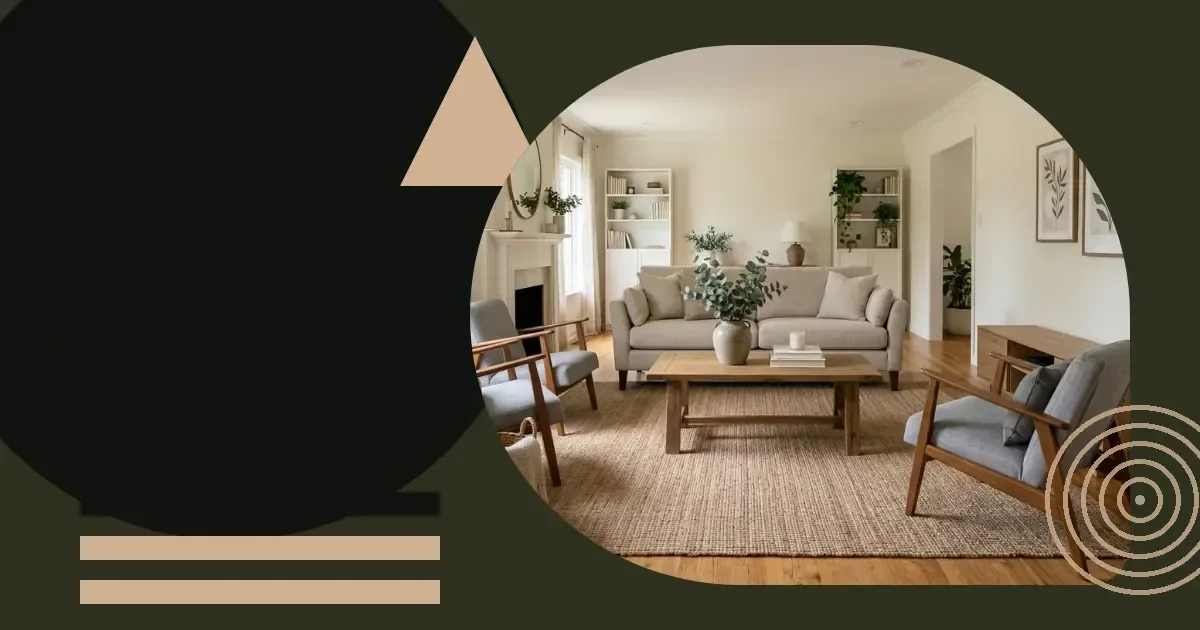
A rug under the seating area defines the conversation zone and stops the floating sofa feeling arbitrary. The front legs of the sofa and chairs should sit on the rug; the back legs can be off it. This pulls the pieces together without requiring the rug to fill the entire floor.
Create a secondary zone in one corner
Square rooms have four corners of equal weight, which flattens the space. Give one corner a different purpose and the room gains depth. A reading chair with a side table and lamp makes that corner a destination rather than leftover space.
The corner you choose depends on the window positions and the main seating arrangement. A corner diagonally opposite the sofa creates the longest sightline across the room, which helps. If you're working with an awkward corner that collects clutter, this is how you reclaim it.
Keep the secondary zone low
A tall bookcase or standing lamp in the corner will anchor it too heavily and compete with the main seating area. Choose furniture that sits below eye level when you're seated on the sofa. This keeps the corner zone distinct without chopping up the room visually.
Arrange furniture at an angle if the room allows
Placing a chair or small sofa on the diagonal, angled towards the main seating, disrupts the square's parallel lines. The move works best in rooms large enough that angled furniture doesn't block the walking route.
The angle should feel natural, not forced. If you have to squeeze past a chair leg every time you cross the room, pull it back into alignment. The goal is to soften the geometry, not create an obstacle course.
Use rugs and lighting to mark zones
A square room lit by one overhead fitting and covered by one rug reads as a single undifferentiated box. Different light sources at different heights and separate rugs for separate zones give the room layers.
Place a floor lamp beside the reading chair, a table lamp on the console behind the sofa and leave the overhead light for when you need full brightness. Each light source defines the zone around it. If you're working in a room with no ceiling light, this layered approach becomes the only option.
Match rug shapes to furniture groupings
A square rug under square seating amplifies the boxy feeling. A rectangular rug under the same arrangement stretches the zone in one direction and eases the symmetry. If the room is large enough for two rugs, use a runner or smaller rectangular rug in the secondary zone.
Steps to arrange your square living room
- Measure the room and mark the centre point on the floor with low-tack tape.
- Place the sofa so its centre aligns with one wall but its back sits away from that wall, creating a gap behind.
- Position a rug under the seating area, with front legs of all seating on the rug and back legs off it.
- Add a chair or small table in the corner diagonally opposite the sofa, creating a second zone.
- Introduce a floor lamp beside the secondary seating and a table lamp on any surface behind the sofa.
- Walk the routes you'll use daily and adjust any piece that blocks movement.
Avoid centering everything on one focal point
A fireplace or television on one wall invites you to line up all the seating facing it. That arrangement turns a square room into a theatre with three empty walls. Not every piece of furniture needs to address the focal point directly.
Set the main seating to face the fireplace or screen, but angle one chair towards the sofa rather than the wall. This creates a conversational triangle and gives people options for where to look and sit.
Balance the focal wall with something opposite
If the fireplace or television sits on one wall, place something with visual weight on the opposite wall. A low credenza, a piece of art or a tall plant brings the eye back across the room and stops all the interest piling up in one place.
Compare layout approaches for square living rooms
| Approach | Works when | Watch for |
|---|---|---|
| Floating sofa | Room is large enough for a walkable gap behind | Sofa blocking a natural route |
| Diagonal furniture | Space allows angled pieces without obstruction | Narrow passages between angled and straight edges |
| Two distinct zones | Room is used for multiple activities | Zones competing for attention rather than complementing |
| Furniture on all four walls | You need maximum seating in a small space | Dead centre with no reason to cross it |
Leave space to move through the room
Walkways between furniture groupings should be wide enough to pass without turning sideways. A comfortable walking route is wider than the span of your shoulders. Measure the gaps between pieces and aim for clear paths that connect the door to the seating and the seating to the window or secondary zone.
In a small square room this can mean choosing a loveseat instead of a full sofa, or one armchair instead of two. Fewer pieces placed with room to breathe will feel more spacious than every surface filled.
Get started this week
Square rooms reward small moves. You don't need new furniture to change how the space reads.
Mark the centre of your room with tape and stand there. Note which walls pull your eye and which feel blank. Pull the sofa half a metre into the room and walk around it. Move one chair to the far corner and add a lamp beside it. Live with each change for a day before deciding whether it works. Most square living rooms improve with less symmetry, not more.
Download PDF: Square Living Room Layout Checklist PDF, 28 KB
Further reading
Frequently asked questions
How do you arrange a sofa in a square living room?
Position the sofa so its back is at least half a metre from the wall rather than pushed against it. This creates a usable zone behind the sofa and breaks the room's boxy symmetry. Anchor the placement with a rug under the front legs of the seating.
What furniture layout works best in a boxy lounge?
Create two distinct zones rather than arranging everything around one focal point. Float the main seating in the centre of the room and add a secondary zone such as a reading chair in one corner. Use rugs and lighting to define each zone separately.
How do you stop a square room feeling flat?
Avoid parallel lines by angling one piece of furniture or using a rectangular rug under square seating. Layer lighting at different heights instead of relying on one overhead fitting, and balance a focal wall with something opposite to pull the eye across the room.