Keep your leather furniture clean and supple in five balanced steps
 Save
Cleaning leather furniture means removing dirt without stripping the oils that keep it soft. Fleur and Grey walks you through a routine that lifts grime and replaces moisture, so your sofa stays supple rather than cracked. You'll know what to use, how often to condition, and which mistakes dry leather out faster than anything else.
Test before you treat the whole piece
Leather reacts differently depending on its finish and age. A cleaner that works on aniline leather can leave protected leather sticky, and a conditioner that soaks into unfinished hide sits on top of sealed surfaces.
Pick a hidden spot—under a cushion, along the back edge where it meets the wall, or inside a fold. Dampen a cloth with your chosen cleaner, wipe a small patch, and wait half an hour. Look for darkening, tackiness, or any change in texture. If the patch dries to match the rest, the product is safe.
Why some leathers reject conditioner
Protected and pigmented leathers have a polymer coating that blocks moisture from reaching the hide beneath. Conditioner pools on the surface instead of sinking in, leaving a greasy film that attracts more dust. These finishes need less frequent conditioning—sometimes none at all—because the seal itself prevents drying.
Remove surface dust before you introduce moisture
Dirt on leather acts like sandpaper once water hits it, grinding into the grain as you wipe. Vacuum the piece with a soft brush attachment, moving along seams and tufting where crumbs and dust settle. For crevices the vacuum can't reach, use a dry microfibre cloth folded into a point.
This step also shows you where spills have left residue. Sticky patches need a damp cloth before conditioning; dried milk or juice will resist oil-based products and trap grime underneath.
Wipe with a barely damp cloth, not a wet one
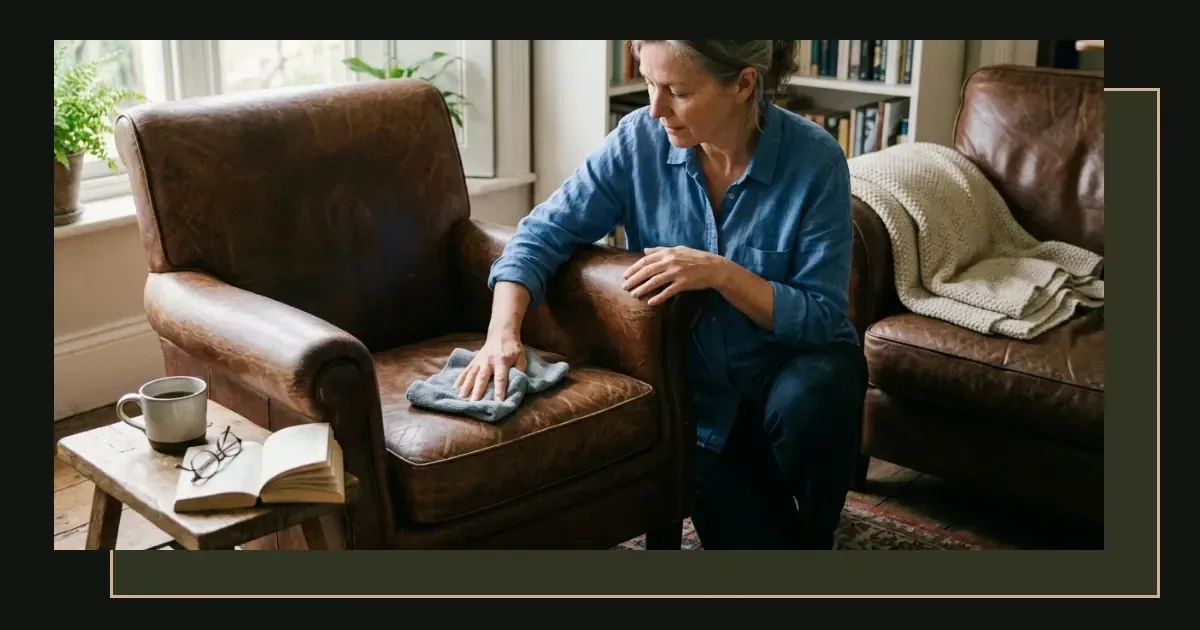
Leather absorbs water fast, and too much swells the fibres, leaving them stiff when they dry. Dampen a lint-free cloth—microfibre or cotton—wring it until it feels almost dry, then wipe in slow, overlapping passes. You're lifting dirt, not scrubbing it.
For stubborn marks, add a drop of pH-neutral soap to the water, work it into a lather on the cloth, and wipe again. Rinse the cloth in clean water, wring it out completely, and wipe away any soap residue. Soap left on leather dries it faster than the original dirt.
What to avoid in the water
Washing-up liquid often contains degreasers that strip natural oils along with the dirt. Bleach, ammonia, and solvent-based cleaners break down the tanning compounds that hold leather together. If a product warns against use on wood or painted surfaces, it's too harsh for upholstery.
Let the leather dry naturally before conditioning
Applying conditioner to damp leather traps moisture under an oily layer, encouraging mould in the padding beneath. After wiping, leave the furniture in a room with moving air—open a window or run a low fan nearby. Avoid radiators, hairdryers, or direct sun; heat pulls moisture out unevenly and cracks the surface.
Drying time depends on how damp the cloth was and how porous the leather is. Aniline and nubuck need longer than protected finishes. Touch the coolest part—under the seat cushions—and when it feels dry, wait another hour before moving to the next step.
Apply conditioner thinly and work it into the grain
Too much conditioner sits on the surface and never absorbs, leaving the furniture greasy for days. Squeeze a coin-sized amount onto a clean cloth, rub it between your palms to warm it slightly, then massage it into the leather in small circles. The warmth helps the oils penetrate.
Work one section at a time—an armrest, a seat cushion, the back—and add more product only when the cloth runs dry. Finished leather takes less; unfinished hide drinks it in and may need a second pass after the first coat absorbs.
How often conditioning is needed
Leather in a sunny room or near a radiator dries faster and needs conditioning more often than a piece in a cool hallway. Check every few months by pinching a hidden fold: if it stays creased instead of bouncing back, the hide is thirsty. Conditioning before that crease appears prevents the damage rather than repairing it.
Buff away excess to avoid attracting dust
Once the conditioner has sat for the time its instructions recommend, take a dry microfibre cloth and buff the entire surface in long, even strokes. This removes any film that didn't absorb and brings up a soft sheen. Leather that feels slick after buffing was over-conditioned; next time use half the amount.
Buffing also redistributes the product into spots you missed on the first pass, evening out the colour and finish across seams and corners.
Balance weekly dusting with occasional deep cleans
- Vacuum or wipe dust weekly to stop grit embedding in the grain, using the soft brush attachment or a dry cloth over the cushions and arms.
- Damp-wipe monthly or whenever spills happen, using the barely-damp-cloth method to lift body oils and food residue before they stain.
- Condition every few months, or when the leather feels stiff or looks dull, applying product sparingly and buffing off the excess.
- Test new products on a hidden patch each time you switch cleaners or conditioners, even if the formula looks similar to what you used before.
- Check for dryness by touch rather than waiting for visible cracks, adjusting your conditioning schedule to the room's heat and light.
This rhythm keeps dirt and dryness from accumulating to the point where professional cleaning becomes the only fix. Checking what lies beneath the finish helps when you're deciding whether a tired piece deserves reconditioning or replacement, and working out if reupholstery makes sense depends partly on the condition of the leather you're trying to save.
Mistakes that dry leather faster than neglect
Using baby wipes or antibacterial wipes introduces alcohol and detergents that dissolve the natural fats in the hide. The convenience of a pre-moistened cloth costs you months of suppleness.
Conditioning without cleaning first seals dirt under the oil, where it grinds into the leather from the inside. And skipping the test patch can leave you with a dark stain or a sticky residue that won't buff away, turning a quick clean into a restoration project.
| Approach | When it works | Risk of drying |
|---|---|---|
| Damp cloth only | Light dust and fresh spills on protected leather | Low if the cloth is wrung nearly dry |
| Soap and water | Sticky residue or ground-in grime | Moderate; requires thorough rinsing and conditioning after |
| Commercial leather cleaner | Stubborn stains on aniline or unfinished leather | Depends on formula; test first |
| Conditioner alone | Maintenance between cleans on dry, unsoiled leather | None, but traps dirt if applied over grime |
Recognise when professional help is overdue
Cracks that run deeper than the surface, patches where the colour has worn through to pale underlayers, or a smell that won't lift with cleaning all mean the leather has passed the point where home care can reverse the damage. A professional can re-dye, patch, or apply a protective finish that extends the life of the piece by years.
Mould spots—green, black, or white patches in seams or under cushions—need expert attention as well. Wiping mould off the surface doesn't kill the spores in the padding, and attempting to clean it yourself spreads them further into the furniture and the room.
Start small this week
Pick one piece and clear half an hour. The difference between leather that cracks in a year and leather that lasts a decade often comes down to a monthly wipe and a seasonal dose of conditioner, both applied lightly.
- Vacuum the cushions and arms with a soft brush to lift surface dust.
- Test your cleaner or conditioner on a hidden fold and wait to see how it dries.
- Wipe one section with a barely damp cloth, let it dry completely, then condition and buff.
- Set a reminder for next month to repeat the damp wipe, and another for a few months' time to condition again.
Download PDF: Leather furniture care checklist PDF, 28 KB
Further reading
Frequently asked questions
How do I know if my leather sofa needs conditioning?
Pinch a hidden fold of the leather—if the crease stays visible instead of springing back, the hide has lost moisture and needs conditioning. Dull patches or a surface that feels papery rather than supple are other signs.
Can I use olive oil or coconut oil to condition leather furniture?
Kitchen oils go rancid over time, leaving a smell and attracting mould. They also darken leather unpredictably and can make it sticky. Purpose-made leather conditioners are formulated to absorb cleanly and stay stable.
What should I do if water leaves a dark stain on my leather sofa?
Let the stain dry completely without heat, then dampen the entire panel lightly and evenly so the water mark blends in. Once it dries again, condition the area to even out the colour. Rubbing or scrubbing makes it worse.