Lifting water rings from wood furniture in four tried methods
 Save
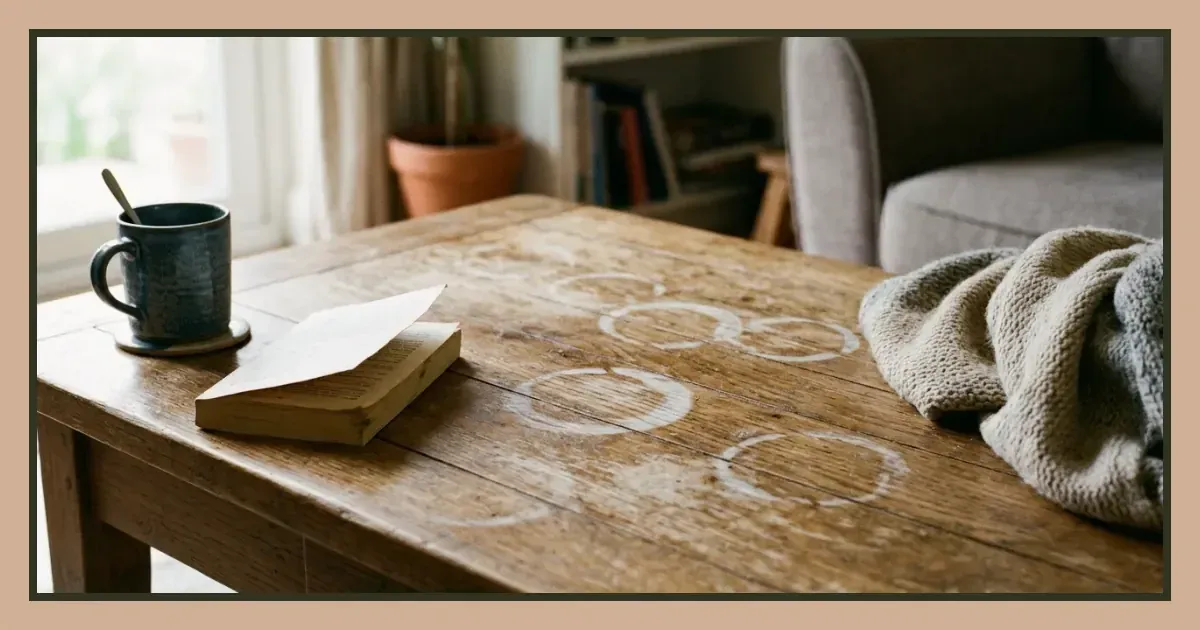
Water rings appear when moisture becomes trapped in the finish of wood furniture, leaving a cloudy white mark where a glass or mug sat without a coaster. The good news: surface rings that look milky or hazy sit in the wax or topcoat and can often be reversed with gentle heat or abrasion. The deeper the mark has penetrated, the more involved the fix becomes. This guide walks through four methods, from the gentlest surface treatment to refinishing work, so you know where to start with Fleur and Grey and when to stop.
Reading the mark before you treat it
A white or cloudy ring means moisture is trapped in the finish layer, not the wood itself. These respond to the methods below. A dark ring or stain that looks brown or black suggests water reached the wood underneath the finish, which cannot be lifted without stripping and refinishing the piece. The colour tells you whether what you're facing is reversible.
Test in a hidden spot first. The underside of a table or the back edge of a shelf lets you see how the finish reacts before working on the visible surface. Some finishes soften or cloud further with heat or solvents; if the test patch looks worse, the piece may need professional attention.
What the finish type changes
Lacquer and shellac finishes respond well to heat and gentle abrasives. Polyurethane and varnish tolerate heat but resist solvent methods. Oil finishes such as Danish oil or tung oil rarely trap water rings in the first place, because moisture evaporates rather than sitting under a sealed layer. Knowing what your piece is finished with helps you choose the right approach, though most domestic furniture from the past few decades carries a polyurethane topcoat.
Lifting surface rings with an iron and cloth
This method works on fresh marks and rings that haven't sat for weeks. The principle: gentle heat draws moisture out of the finish without scorching the wood below. Set the iron to its lowest setting, with no steam. Lay a clean, dry cotton cloth over the mark and press the iron down for a few seconds, then lift and check. Repeat in short bursts until the ring fades.
Move the iron slowly. Holding it in one place too long can melt the finish or leave a glossy patch where the wax has melted unevenly. The cloth protects the surface from direct contact with the metal plate. If the ring is still visible after several passes, let the wood cool completely before trying a second round or switching methods.
When heat alone doesn't shift it
Older rings or marks that have hazed over may need a second step. After heat treatment, a very light rub with fine wire wool dipped in furniture wax can level the surface enough to blend the remaining cloudiness. Rub in the direction of the grain, using minimal pressure, and wipe away the wax residue with a soft cloth. This abrades the damaged finish microscopically, redistributing the wax so the haze becomes less obvious.
Using mayonnaise or petroleum jelly for stubborn marks
This slower method relies on oil penetrating the finish and displacing trapped moisture over time. Spread a thin layer of mayonnaise or petroleum jelly over the ring, then leave it for several hours or overnight. Wipe clean with a soft cloth and check the result. The oil in mayonnaise can soften some finishes enough for moisture to escape; the method works best on lacquer and shellac.
The drawback: it leaves the treated area duller than the surrounding finish. Once the ring has lifted, the whole surface needs a light wax or polish to even out the sheen. This approach suits pieces where a slight change in gloss won't be obvious, such as a bedside table or a shelf, rather than a dining table under direct light.
Rubbing out rings with fine abrasives
When the ring remains after heat and oil treatments, controlled abrasion can level the damaged finish. This method removes a thin layer of the topcoat to reach undamaged material underneath. You'll need fine wire wool, furniture paste wax or a dedicated rubbing compound, and patience.
- Clean the surface to remove dust and residue, then dry it thoroughly.
- Dip fine wire wool in furniture wax or apply a small amount of rubbing compound to the pad.
- Rub the ring in small, circular motions, following the grain where possible, using light pressure.
- Wipe the area clean with a soft cloth and inspect the result; repeat if the ring is fading but still visible.
- Once the ring has blended, wax or polish the entire surface to restore an even sheen across the piece.
This approach works on polyurethane and varnish finishes that won't respond to solvents. The risk: rubbing through the finish entirely, exposing bare wood that then needs refinishing. Stop as soon as the ring has faded to match the surrounding area, even if a faint shadow remains. Over-abrading creates a bigger problem than the ring itself.
Matching the sheen afterwards
Abrasive methods leave the treated area with a different gloss level from the rest of the piece. Applying paste wax or furniture polish to the entire surface brings the sheen back into balance. Buff with a clean cloth in the direction of the grain, working in thin coats rather than one heavy application. The goal is an even finish across the whole top, not a glossy patch where the ring was.
Recognising when refinishing is the only fix
Dark rings, rings that remain after all surface treatments, or pieces where the finish has been rubbed through during removal all point to refinishing. This involves stripping the old finish, sanding the wood, then applying a new topcoat. It's beyond quick fixes and suited to pieces worth the time and material cost.
Professional refinishers can match original finishes and repair deeper damage, such as stains that have penetrated the wood grain. For everyday furniture or pieces without sentimental value, living with a faint remaining mark often makes more sense than the work and expense of stripping and refinishing. The decision rests on how visible the damage is and how much the piece matters to you.
| Method | Best for | Time needed | Risk to finish |
|---|---|---|---|
| Iron and cloth | Fresh white rings on lacquer or shellac | A few minutes | Low if temperature controlled |
| Mayonnaise or petroleum jelly | Older rings, softer finishes | Several hours to overnight | May dull the sheen |
| Fine abrasives | Stubborn surface rings on hard finishes | Ten to twenty minutes | Moderate; can rub through |
| Refinishing | Dark rings, bare wood exposed | Several days including drying | Complete removal of old finish |
Preventing water rings before they form
Coasters and placemats stop moisture reaching the finish in the first place. A hot mug or a glass with condensation both deposit enough water to fog a finish over time. Waxing wood furniture every few months adds a sacrificial layer that takes the brunt of minor spills before they reach the topcoat underneath.
Wipe spills immediately. Water left sitting on a finish works its way into microscopic cracks and grain lines, even on well-sealed surfaces. A soft cloth kept nearby for quick clean-ups prevents most rings from forming. For pieces that see heavy use, such as dining tables or coffee tables, a glass top or a washable table runner adds protection without changing the look of the wood beneath.
Caring for the finish long-term
Regular dusting with a dry or slightly damp cloth keeps grit from scratching the surface. Furniture polish or paste wax applied thinly and buffed well maintains the finish's integrity and makes future spills easier to wipe away. Avoid silicone-based sprays, which can build up and make refinishing difficult if the piece ever needs it. Knowing whether your furniture is solid wood or veneer also shapes how aggressively you can treat surface damage; veneer won't tolerate heavy sanding. For more on that distinction, see identifying solid wood or veneer in four practical checks.
What to do this week
Start with the method that matches the age and severity of the mark on your piece. Fresh rings respond to heat; older cloudiness may need oil or gentle abrasion. Test in a hidden spot, work slowly, and stop as soon as the ring has faded enough to blend with the rest of the surface.
- Find a clean cotton cloth and set your iron to the lowest heat setting with no steam.
- Test the heat method on a hidden edge or the underside of the piece to see how the finish reacts.
- Keep furniture wax and a soft cloth within reach for the week ahead, and wipe spills the moment they happen.
- Check whether the piece is worth refinishing if surface treatments don't shift the mark, or whether you're willing to live with a faint shadow.
Download PDF: Water Ring Removal Checklist PDF, 28 KB
Further reading
Frequently asked questions
How long does it take for a water ring to set permanently in wood furniture?
White water rings trapped in the finish can often be reversed even after weeks or months, though they become harder to lift over time. Dark rings that have reached the wood itself are permanent unless the piece is refinished.
Can you remove heat marks from wood using the same methods as water rings?
Heat marks and water rings both appear as white or cloudy patches in the finish, and the same treatments apply: gentle heat, oil or fine abrasives. The cause differs, but the damage sits in the topcoat and responds to the same fixes.
What happens if you rub too hard when removing a cup ring from a table?
Excessive pressure or prolonged rubbing can wear through the finish entirely, exposing bare wood underneath. Once that happens, the area needs refinishing to protect the wood and match the surrounding surface.