Find your existing paint colour in four practical steps
 Save
Matching existing paint without the tin is one of the most common decorating challenges in any home. A scuff on the hallway wall or a patched repair leaves you hunting for a colour you can no longer name. Fleur and Grey walks you through the routes that work when the original information is gone, from sample cards to in-store colour matching services.
Take a sample to a colour-matching service
Most paint retailers now offer a colour-matching service using a spectrophotometer. The machine reads the light reflected from your sample and translates it into a formula the shop can mix on the spot.
Bring a sample at least the size of a stamp — smaller fragments give inconsistent readings. A piece of painted card or a flake lifted from an inconspicuous area both work. Clean the surface beforehand; dirt and dust throw the reading off.
The match is closest when the sample and the finished paint share the same base. Matt reads differently from silk, so specify the sheen you need when the shop mixes the tin.
Where to cut your sample
Take it from an area that has not faded. Paint near windows or in direct sun loses intensity over time, so a sample from behind a radiator or inside a cupboard gives a truer reading. If the only accessible area is faded, the matched paint will look darker than the rest of the wall once it dries.
How accurate the service is
Spectrophotometers are reliable for solid colours but struggle with metallic or pearlescent finishes. The technology reads pigment, not the way light plays across a surface. Textured walls also present a challenge — the rougher the finish, the harder it is to get a clean reading.
Compare sample cards under your own lighting
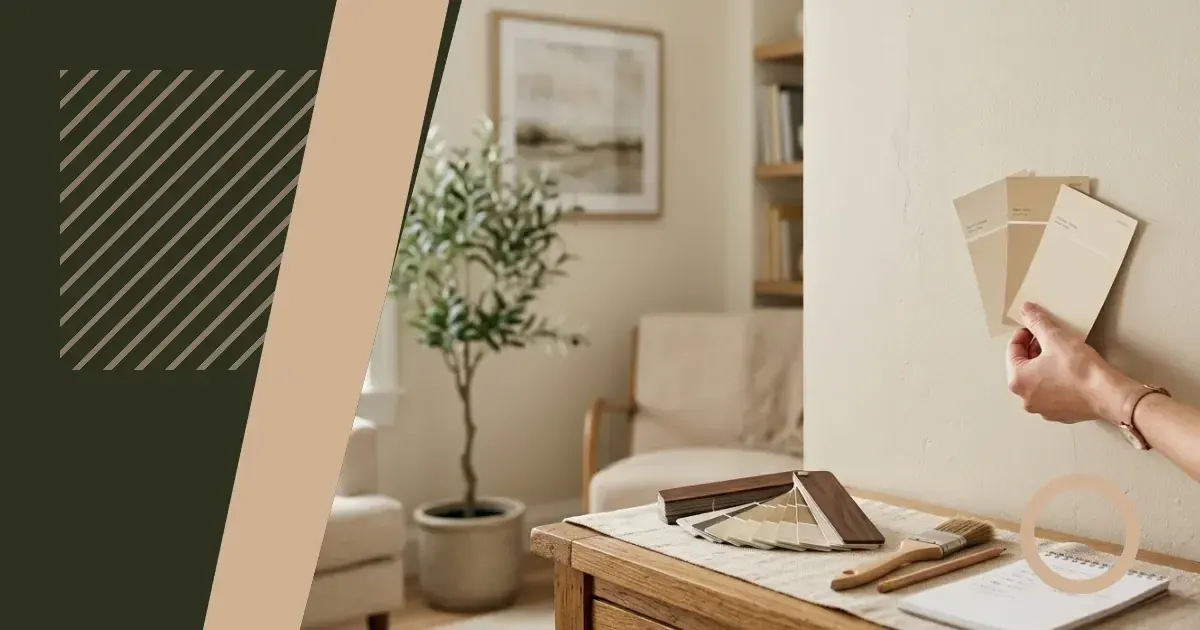
When you cannot take a physical sample, work backwards from the paint ranges available. Collect sample cards from different brands and hold them against the wall in the room where the paint lives.
Daylight changes throughout the day, so check the cards in morning light and again in the evening. Artificial lighting shifts colours too — a warm bulb makes cool greys look dingy, while a daylight LED shows undertones more honestly.
Narrow the field to three or four cards, then test small pots on the wall itself. Paint a square large enough to see in context — a patch smaller than your hand is hard to judge. Let it dry completely; wet paint always looks darker.
| Method | What it suits | Accuracy |
|---|---|---|
| Spectrophotometer | Solid colours, matt or silk | Close match on first attempt |
| Sample cards | Whites, neutrals, common shades | Depends on range and your eye |
| Tester pots | Final confirmation before buying | As good as it gets |
Work with the room's lighting before choosing
Matching existing paint is as much about the light in the room as the pigment itself. A north-facing room leans cooler, so a neutral that looked warm in the shop may read flat once on the wall. South-facing rooms pull warmth from most colours, which can make a careful match feel too intense.
If the room has changed since the walls were first painted — new curtains, different furniture, a lamp moved — the colour you are matching may no longer suit the space. Before committing to an exact match, consider whether the original choice still works with the light and the furnishings now in the room. Choosing the right shade of white follows the same principle: the light decides how the colour behaves.
Test at different times of day
Paint a test square and live with it for a few days. Morning light reveals cool undertones; late afternoon sun brings warmth forward. A colour that feels right at midday may look washed out by evening if you rely on artificial light after dark.
Ask the previous owner or landlord
If you are renting or have recently moved in, the previous occupant or landlord may still have the paint details. Builders and decorators often keep records of the colours used on a job, particularly if the property was repainted before you arrived.
Some landlords store leftover paint for touch-ups between tenancies. A quick message saves the effort of colour matching, and you are more likely to get an exact match than any service can provide from a sample.
When you should repaint the whole wall instead
Even a perfect colour match shows a difference in sheen if the existing paint has aged. Walls near doors and light switches collect dirt and oils that dull the finish, so a fresh patch of the same colour can look brighter simply because it is clean.
Repaint from corner to corner rather than spot-touching if the wall is heavily marked or the paint is more than a few years old. Feathering the edges of a small repair helps the new paint blend, but on a large or prominent wall, the effort of blending often costs more time than repainting.
Textured finishes and stippled effects are particularly hard to match. Even if the colour is identical, a difference in application shows. Rollers leave a different texture from brushes, and hand-applied finishes are near impossible to replicate exactly.
Identify the paint type before you start
Modern water-based paints do not adhere well to old oil-based finishes without preparation. Rub a small area with a cloth dampened in methylated spirit — if colour comes off on the cloth, the existing paint is water-based. If nothing lifts, it is oil-based, and you will need to sand and prime before applying new paint.
This step matters whether you are touching up or repainting. A fresh coat over an incompatible base peels or flakes within weeks, and no colour match survives that.
Check the sheen level
Matt, silk and gloss all reflect light differently. A colour matched in the wrong sheen stands out even when the pigment is identical. If you are unsure which finish the wall currently has, look at it from an angle in strong light — matt absorbs light evenly, silk shows a slight sheen, and gloss reflects.
Use a digital colour matcher as a starting point
Some paint brands offer apps that let you photograph a wall and suggest the closest match from their range. The technology is less accurate than a spectrophotometer, but it narrows the field when you are working from a large colour card collection.
These apps work best in natural light and struggle with very pale or very dark colours. Treat the result as a shortlist rather than a final answer, and always test a small pot on the wall before buying the full quantity.
Steps to match your existing paint
- Lift a sample from an area that has not faded, at least stamp-sized, and clean off any dirt or dust.
- Take the sample to a paint retailer with a colour-matching service and specify the sheen you need.
- Buy a tester pot and paint a patch on the wall large enough to judge in context.
- Check the test patch in morning light and again in the evening before committing to the full quantity.
Build a paint record for next time
Once you have matched or repainted, write the colour name, brand and sheen on a piece of card and store it with the leftover paint or tape it inside a cupboard door. A photograph of the tin label works too, saved where you will find it when the next scuff appears.
If you are repainting a whole room, coordinating your woodwork and walls gives the space a cohesive feel. Keeping a record of both makes future touch-ups straightforward, and you will avoid the same hunt when the hallway needs refreshing again.
#DIY #Neutral colours #Budget decorating
Download PDF: Paint Matching Checklist PDF, 28 KB
Further reading
Frequently asked questions
Can I match paint without taking a sample from the wall?
Yes, by comparing sample cards against the wall in the room's own lighting and testing small pots before committing. Digital colour-matching apps can narrow the field, though they are less accurate than taking a physical sample to a spectrophotometer service.
How do I find the exact colour if I've lost the paint tin?
Take a clean sample at least stamp-sized to a paint retailer with a colour-matching service. The spectrophotometer reads the pigment and mixes a close match on the spot, provided you specify the same sheen as the original.
Why does my matched paint look different once it dries?
Wet paint always appears darker, and the lighting in your room shifts how the colour reads. Test a patch on the wall and check it over a full day before buying the full quantity, as morning and evening light reveal different undertones.