Soften your modern room in five moves that keep the lines clean
 Save
The fixes for making modern rooms warmer sit in plain view, yet most people reach for the paint tin first. Fleur and Grey walks through the textures, materials and lighting adjustments that add warmth to contemporary spaces without compromising the aesthetic. These changes work within the style, not against it.
Work out what's making your room feel cold
Modern interiors feel cold when hard surfaces outnumber soft ones. Polished concrete floors, glass tables, metal frames and painted walls all reflect sound and light sharply. The eye reads this as clinical because there's nothing to absorb or diffuse what hits it.
Cool colour palettes intensify the effect. Whites, greys and blacks dominate modern schemes, and without warmer tones to offset them, the room feels stark. The proportions matter too: a single grey sofa in a white room will always read as cold, however good the design.
Minimal window dressing leaves light unfiltered. Contemporary spaces often feature bare windows or simple roller blinds, flooding the room with daylight that shows every hard edge. After dark, overhead lighting does the same thing.
Add texture where it disrupts the flat surfaces
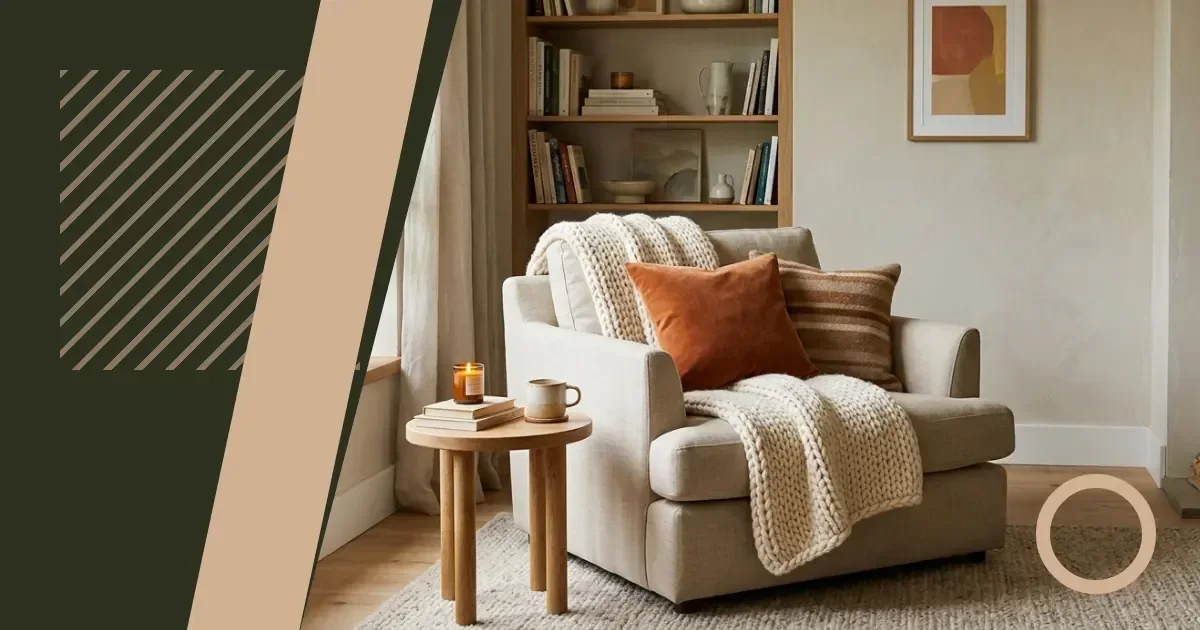
Textured textiles break up smooth expanses without adding visual clutter. A chunky knit throw across the back of a leather sofa, a wool rug over polished floorboards, or linen cushions against a velvet chair each introduce a surface that catches light differently. The contrast between textures gives the eye somewhere to rest.
Layer textiles rather than scattering them. Two or three cushions in different weaves grouped together create more warmth than single cushions spread across a room. A rug layered over carpet near a seating area defines the zone and doubles the softness underfoot.
Avoid matching sets. Textiles in the same colour but different materials—a wool throw, a linen cushion, a cotton blind—add depth that identical pieces cannot. The variation in how each one absorbs and reflects light makes the scheme feel considered rather than austere.
Choose weaves and pile that hold warmth
Heavy, textured fabrics trap air and feel warmer to touch than smooth ones. Wool, bouclé, chenille and velvet all have depth that cotton sateen and silk lack. The physical warmth reinforces the visual warmth.
Looped and cut piles in rugs and upholstery create shadows within the material itself. A flatweave rug will always feel cooler than one with a deep pile, even in the same colour. The shadows make the surface read as three-dimensional rather than flat.
Bring in natural materials that absorb light
Wood softens modern interiors because it absorbs rather than reflects. A wooden coffee table, shelving or picture frames introduce grain and variation that manufactured materials do not have. The imperfections—knots, colour shifts, the direction of the grain—give the eye detail to follow.
Unfinished or matte finishes work better than gloss. Oiled or waxed wood feels warmer than lacquered pieces because the surface is porous. The same principle applies to other natural materials: untreated linen, raw-edged ceramics and stone with a honed finish all absorb light where polished equivalents bounce it back.
Position natural materials near hard surfaces
Place a wooden tray on a glass coffee table, or a ceramic vase on a metal shelf. The contrast between the two surfaces makes each more noticeable. Natural materials feel warmer when they sit directly against something cold and hard.
- A wooden bowl on a marble worktop
- Woven baskets beneath a glass console
- A linen runner across a chrome dining table
- Stone coasters on a lacquered side table
Adjust your lighting to soften the space
Overhead lighting flattens a room and casts harsh shadows. Modern interiors often rely on a single ceiling fixture, which lights the whole space evenly but coldly. Layering light sources at different heights creates pockets of warmth and makes the room feel occupied rather than lit for function.
Table lamps and floor lamps introduce light at eye level, where it feels more intimate. Positioning them where you sit—beside a sofa, next to a reading chair, on a sideboard behind seating—means the light reaches you rather than illuminating empty floor. Positioning table lamps so they light the whole room explains how to angle light for both atmosphere and practicality.
Warm-toned bulbs change the feel immediately. Bulbs with a warm white or soft white colour temperature emit a yellowish light that counteracts the blue cast of daylight and cool overhead fixtures. The walls, furniture and textiles all take on a warmer tone under this light.
Dim or remove blue-toned light
Cool white and daylight bulbs make modern rooms feel colder because they emphasise the blue end of the spectrum. Replacing them with warmer equivalents costs little and makes an immediate difference. Where a fitting takes multiple bulbs, changing even half of them shifts the balance.
If the room feels too bright rather than too cold, reducing the number of active light sources works better than dimming everything. Turn off the overhead light and rely on two or three lamps instead. The variation in light levels adds depth that even illumination removes. Brighten your room in five moves before you touch a single bulb covers the reverse problem, but the principles of layering and positioning apply to both.
Warm your colour palette without repainting
Introducing warmer tones through accessories and soft furnishings shifts the temperature of a room without changing the walls. Ochre, rust, terracotta, camel and warm greys sit comfortably in contemporary schemes but push the palette away from stark whites and cool greys.
The table below compares ways to add warmth through colour without committing to paint.
| Method | Where it works | Visual impact |
|---|---|---|
| Warm-toned textiles | Cushions, throws, rugs | Subtle, easily changed |
| Wooden furniture | Tables, shelving, frames | Structural, long-term |
| Ceramics and pottery | Vases, bowls, planters | Concentrated, decorative |
| Warm metallics | Light fittings, handles, mirrors | Reflective, catches light |
Warm metallics—brass, copper, bronze—reflect light with a yellow cast that cool metals like chrome and steel do not. Swapping metal accessories or choosing warm-toned light fittings adds warmth in small, high-impact places.
Keep the balance between warm and cool
A modern room needs both to stay contemporary. Too many warm tones tip the space into traditional territory. The warmth should feel like an accent rather than the base. If the walls and floor are cool, keep them that way and introduce warmth through movable elements.
Take five steps this week to shift the temperature
The changes below work in order of effort and cost. Start with the first and add the others as budget and time allow.
- Replace overhead bulbs with warm white equivalents and turn on a table lamp instead of the ceiling light tonight.
- Add one chunky textured throw or a deep-pile rug in a warm neutral tone to the room's main seating area.
- Position a wooden tray, bowl or set of coasters somewhere you currently have a hard, reflective surface.
- Group three cushions or textiles in different textures together on a sofa or bed, rather than spacing them evenly.
- Swap one cool-toned accessory—a chrome frame, a glass vase—for a warmer material in the same spot.
Balance old and new to add character
Vintage or second-hand wooden furniture brings warmth and imperfection into contemporary schemes. A mid-century sideboard, a reclaimed dining table or an older wooden mirror frame each carry signs of age that new pieces lack. The patina and wear soften the room without dating it.
Mixing periods prevents the space from feeling too uniform. A single older piece among modern furniture becomes a focal point and gives the room a sense of history. Balance old and new furniture in four practical moves explains how to combine styles without the room feeling confused.
Start with lighting and one textile
Changing bulbs and adding a single textured throw will shift how a modern room feels within an evening. The difference between cool and warm light is immediate, and one substantial textile in the right place gives the eye something soft to land on. These two changes cost less than repainting and work within any contemporary aesthetic.
The other adjustments—natural materials, layered textiles, warmer accent colours—build on that foundation. None of them compromise the clean lines or minimal feel of a modern interior. They make the room feel inhabited rather than staged, and warmer without losing what makes it contemporary.
#Modern interiors #Texture #Neutral colours #Mood lighting
Download PDF: Making a Modern Room Feel Warmer: Your Action Checklist PDF, 30 KB
Further reading
Frequently asked questions
Can I warm a modern room without adding clutter or losing the minimalist feel?
Yes. Focus on texture rather than quantity—one chunky wool throw or a deep-pile rug adds warmth without adding objects. Keep the colour palette neutral and choose textiles and materials with depth rather than pattern. The warmth comes from how surfaces absorb light, not from how many things are in the room.
Replace the bulbs with warm white versions and add one substantial textile—a rug or a throw—in a warm neutral. Both are reversible, cost little and make an immediate difference. Position a table lamp where you sit most often and use it instead of the overhead light in the evening.
Will adding wood furniture to an all-white modern room make it feel less contemporary?
Not if the wood has clean lines and a simple shape. A wooden coffee table or shelving in a modern silhouette keeps the contemporary feel while introducing warmth through the material. Choose pieces with minimal detailing and avoid anything ornate or heavily turned.