Cleaning your jute or seagrass rug without water damage
 Save
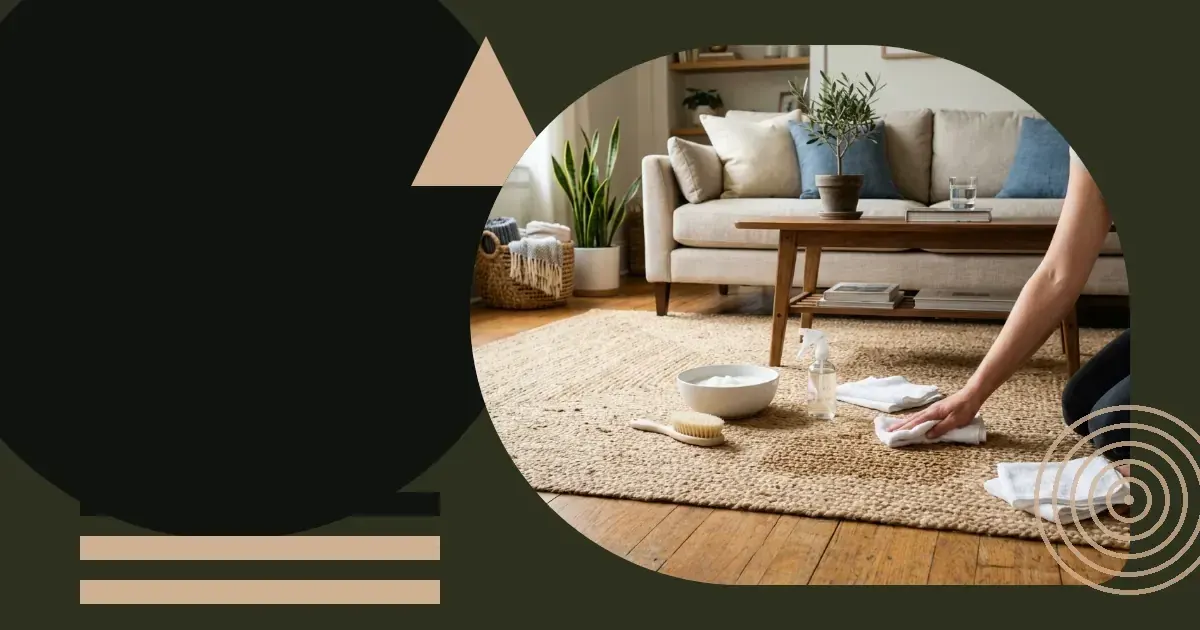
Jute, seagrass and sisal rugs add warmth and texture to a room, but water is their enemy. Natural plant fibres shrink, distort and take days to dry when soaked, so the usual wet-cleaning methods don't work. You need dry techniques and minimal moisture, applied carefully. This guide walks through four methods that remove dirt and spills without damaging the weave, plus what to do when something liquid hits the floor.
Natural fibre rugs need regular maintenance because their rough texture traps dust and crumbs more readily than synthetic pile. Leaving dirt to build up grinds it into the weave, darkening the rug and making it feel rough underfoot. A light weekly clean keeps the surface fresh; deeper attention every few months lifts embedded grit without saturating the fibres. Fleur and Grey covers practical care for the pieces that ground your rooms.
Vacuuming without pulling the weave apart
A vacuum cleaner is the first line of defence for jute and seagrass. Run it over the rug once or twice a week, using the floor setting rather than the beater bar. The rotating brush of a beater bar snags and pulls natural fibres, loosening the weave over time. If your vacuum doesn't let you turn the brush off, use the upholstery attachment instead, working in overlapping strokes along the length of the weave.
Turn the rug over every few weeks and vacuum the underside. Dirt that falls through the weave collects there, and grit pressed against the floor scratches hard surfaces. Flip the rug back and give the floor underneath a quick sweep before laying it down again.
Using a stiff brush for stubborn dirt
When vacuuming doesn't shift dried mud or ground-in dust, a stiff-bristled brush does the work. Natural bristles or a firm synthetic brush both work; avoid wire brushes, which cut the fibres. Brush in short, firm strokes along the direction of the weave, not against it. The motion lifts dirt to the surface, where you can vacuum it up.
Work outside if the rug is portable. Drape it over a railing or washing line and beat it with a broom handle or rug beater first, then brush. The beating dislodges loose dust before you start brushing, so you're not just moving it around the surface. Inside, lay an old sheet underneath to catch what falls.
Dealing with spills before they soak in
Liquid spills need immediate action. Blot with a clean, dry cloth or kitchen paper, pressing down firmly to absorb as much as possible without rubbing. Rubbing spreads the spill and pushes it deeper into the fibres. Keep blotting with fresh sections of cloth until no more liquid lifts.
Once you've blotted up the bulk, dampen a clean cloth with plain water—just damp, not wet—and press it onto the stain. Blot again with a dry cloth. Repeat this twice, then weigh down several layers of dry towel over the area and leave them for a few hours. The towels wick moisture out of the rug. Stand a fan nearby or open a window to speed drying; damp jute left in still air can develop mildew.
What works for oily marks
Grease and oil don't respond to water. Sprinkle bicarbonate of soda over the mark straight away, covering it completely. Leave it for several hours—overnight if the spill is fresh—then vacuum it up. The powder absorbs the oil. If a shadow remains, repeat the process. For older stains, a tiny amount of dry-cleaning solvent on a cloth can lift the residue, but test it on an inconspicuous corner first; some dyes react to solvents.
Four dry-cleaning methods compared
| Method | What it removes | How often |
|---|---|---|
| Vacuuming | Surface dust and crumbs | Weekly |
| Stiff brush | Embedded dirt and dried mud | Monthly or as needed |
| Bicarbonate of soda | Odours and light oily marks | When a smell develops |
| Dry-cleaning powder | General grime and light staining | Every few months |
Refreshing the whole rug with dry-cleaning powder
Dry-cleaning powder designed for carpets works on natural fibre rugs. Sprinkle it evenly across the surface, then work it into the weave with a stiff brush, using the same motion as before. Leave the powder for the time the packet specifies—often around twenty minutes—then vacuum thoroughly. The powder binds to dirt particles, lifting them out when you vacuum.
This method freshens a rug that's looking dull without introducing moisture. Do it outside if the rug is light enough to carry; the powder creates dust as you brush and vacuum. If working indoors, open windows and move furniture away from the area.
Steps to clean without soaking
- Vacuum both sides of the rug with the beater bar turned off, or use the upholstery attachment.
- Take the rug outside and beat it to dislodge deep dust, then brush firmly along the weave with a stiff-bristled brush.
- Vacuum again to remove loosened dirt.
- Sprinkle dry-cleaning powder or bicarbonate of soda evenly over the surface and work it in with the brush.
- Leave the powder for the recommended time, then vacuum thoroughly until no powder remains.
Preventing damage before it starts
Natural fibre rugs last longer when kept out of high-moisture areas. Bathrooms, kitchens and hallways near external doors see more spills and damp, so consider where the rug sits. A doormat outside and just inside the entrance reduces the amount of wet and mud walked onto the rug.
Rotate the rug every few months so wear spreads evenly. High-traffic paths flatten the weave faster than edges that see less footfall. Moving the rug by a quarter-turn every season keeps one section from wearing through while the rest stays intact. Underlay helps too, cushioning the weave and stopping the rug from sliding on hard floors, which creates friction and speeds wear. If you're choosing underlay for other flooring, the principles are similar—find out more in the guide on matching underlay to laminate, where grip and cushioning both matter.
Recognising when professional cleaning is needed
Some stains and smells won't shift with home methods. Red wine, pet urine and anything with a strong dye can penetrate deep into jute, and scrubbing risks damaging the fibres. Professional rug cleaners use low-moisture techniques and specialised equipment designed for natural fibres. They extract dirt without soaking the rug, then dry it in controlled conditions to prevent shrinkage or mildew.
Take the rug to a cleaner rather than using a mobile service. Natural fibres need to be dried flat and evenly, which is easier in a workshop than in your front room. Ask whether the cleaner has experience with jute, seagrass or sisal before booking, and mention any stains or odours when you drop the rug off.
Choosing care methods by fibre type
Jute, seagrass and sisal all need dry or minimal-moisture cleaning, but their textures differ slightly. Jute is the softest and most prone to water damage; it darkens when wet and takes longest to dry. Seagrass is smoother and less absorbent, so damp-blotting a spill is safer, but it still shouldn't be soaked. Sisal sits between the two: tougher than jute, rougher than seagrass, and more forgiving of a damp cloth if you dry it quickly afterwards.
Check the care label or the retailer's instructions when you buy the rug. Some natural fibre rugs have a latex or synthetic backing that changes how much moisture they can tolerate. Latex-backed rugs dry faster but can crack if over-wet, so the same dry-first rule applies.
Download PDF: Natural fibre rug care checklist PDF, 29 KB
Further reading
Frequently asked questions
Can I steam clean a jute or seagrass rug?
No. Steam introduces too much moisture and heat, causing natural fibres to shrink, warp and take days to dry. Stick to dry-cleaning powder, vacuuming and minimal damp-blotting for spills.
How do I stop my sisal rug smelling musty?
Sprinkle bicarbonate of soda over the entire rug, leave it overnight, then vacuum thoroughly. If the smell persists, the rug may be damp underneath—lift it, air both sides and check the floor for moisture.
What's the safest way to clean a jute rug in a dining room under the table?
Vacuum weekly with the beater bar off to catch crumbs before they're trodden in. Blot spills immediately with a dry cloth, then use a barely damp cloth if needed. Rotate the rug every few months so the area under chairs wears evenly.